Subscription NFT: Pay-Per-Second Game Subscriptions on Blockchain
(opens in new window)Behind The Project
Take World of Warcraft’s subscription model: players pay $14.99 upfront for a full month of access, even if they only play for a few nights. Busy with work mid-month? Your money is still gone.
This creates a fundamental mismatch between how games charge (monthly chunks) and how people actually play (sporadic sessions). Players resent paying for unused time, and game developers lose potential customers who won’t commit to a full month when they know they cannot play consistently.
At Sakaba, we saw an opportunity: what if subscriptions could work like a running taxi meter? You only pay for the seconds you are actually playing.
(opens in new window)Solution & Approach
I architected a subscription NFT system that brings real-time, per-second streaming payments to game passes and membership systems.
Instead of monthly fees, players are charged by the second they are actively using premium features. Working with the project manager to define requirements and the backend developer to integrate payment flows, I designed and implemented the smart contract infrastructure and developer SDK.
The goal was to make it simple for game developers to integrate subscription NFTs without writing a single line of Solidity.
Here is an example of a Battle Pass from Ninokuni -Cross Worlds-. The top one represents the free pass, while the bottom one is the paid (premium) pass. The number in the center indicates the stage (level) and the corresponding items that can be obtained at each stage.
(opens in new window)Technical Challenges
(opens in new window)Smart Contract Architecture That Scales
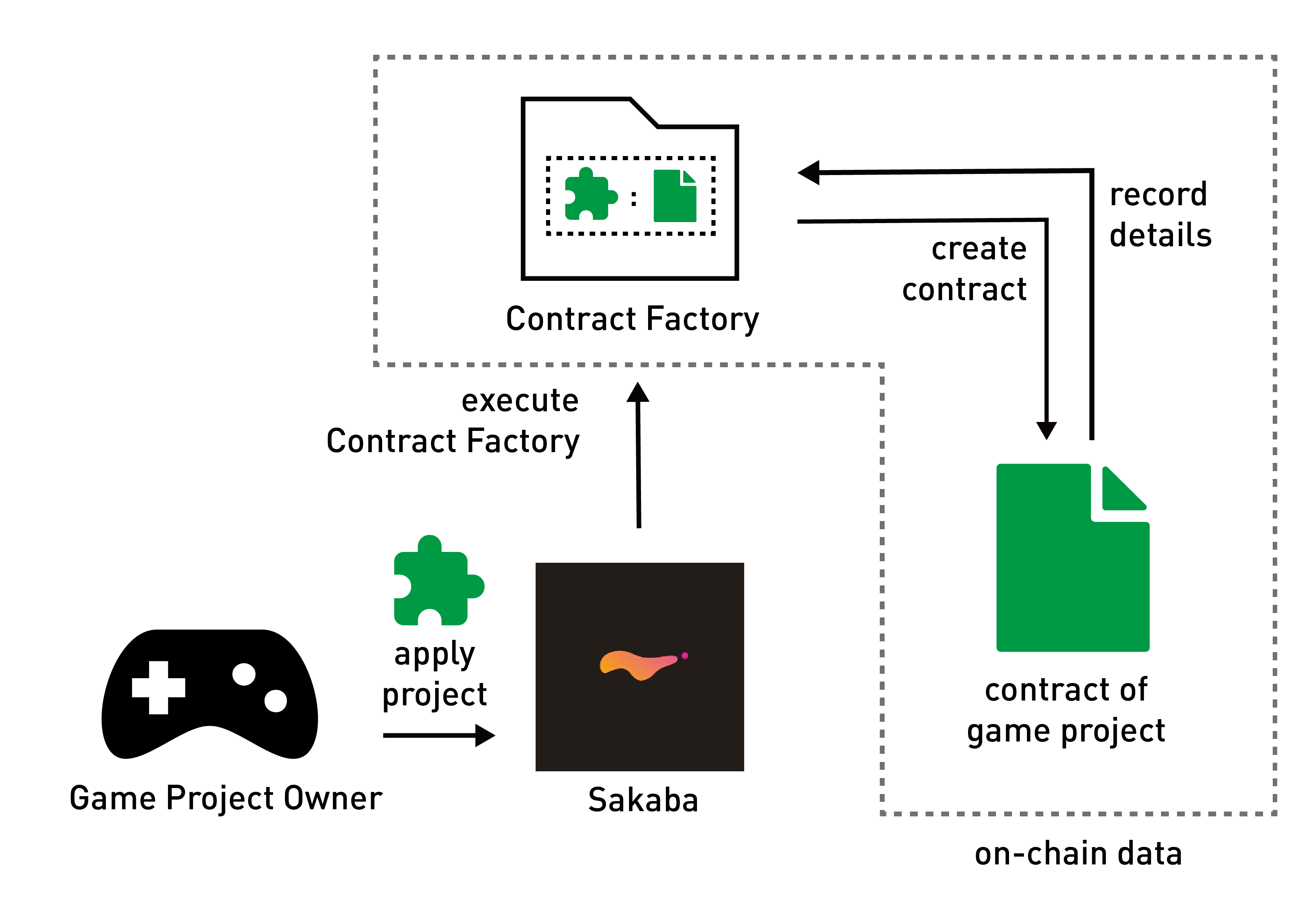
Every game needs its own smart contract, but game developers may not be familiar with deploying and managing contracts on-chain. I needed a system that scales to hundreds of games while staying secure.
I designed a Factory Contract that generates customized NFT contracts on-demand. When a game studio signs up through our dashboard, the factory automatically deploys a fresh NFT contract with their branding, pricing model, and access rules built in. Game developers configure their battle pass through a web interface, and the system handles all blockchain complexity behind the scenes.
I wrote the Factory Contract in Solidity with upgradeable proxy patterns and built Python scripts for monitoring and indexing all child contracts. Deploying on Polygon kept gas fees low, about $0.01 per subscription compared to $20+ on Ethereum Mainnet.
(opens in new window)Verifiable Subscriptions That Auto-Expire
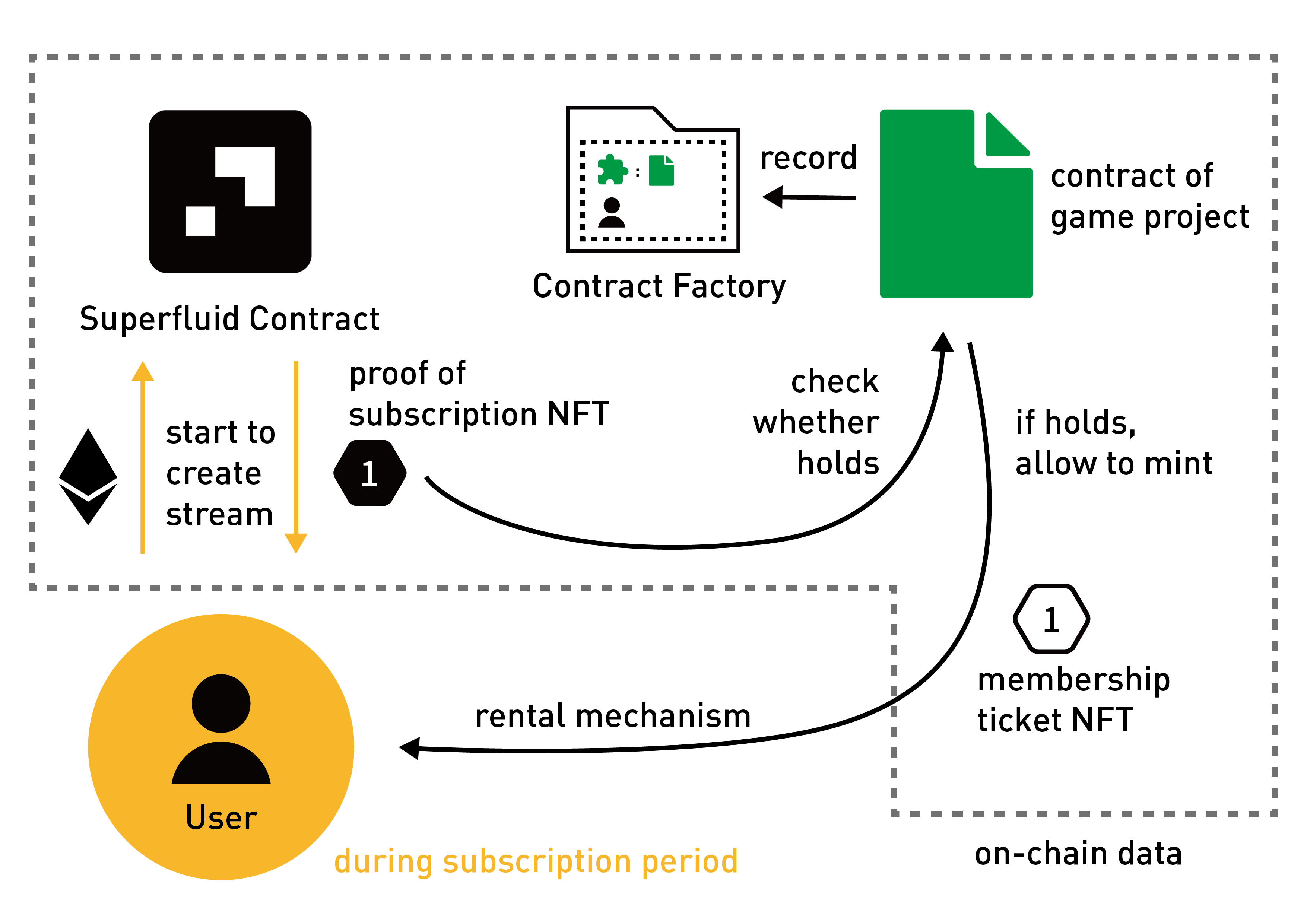
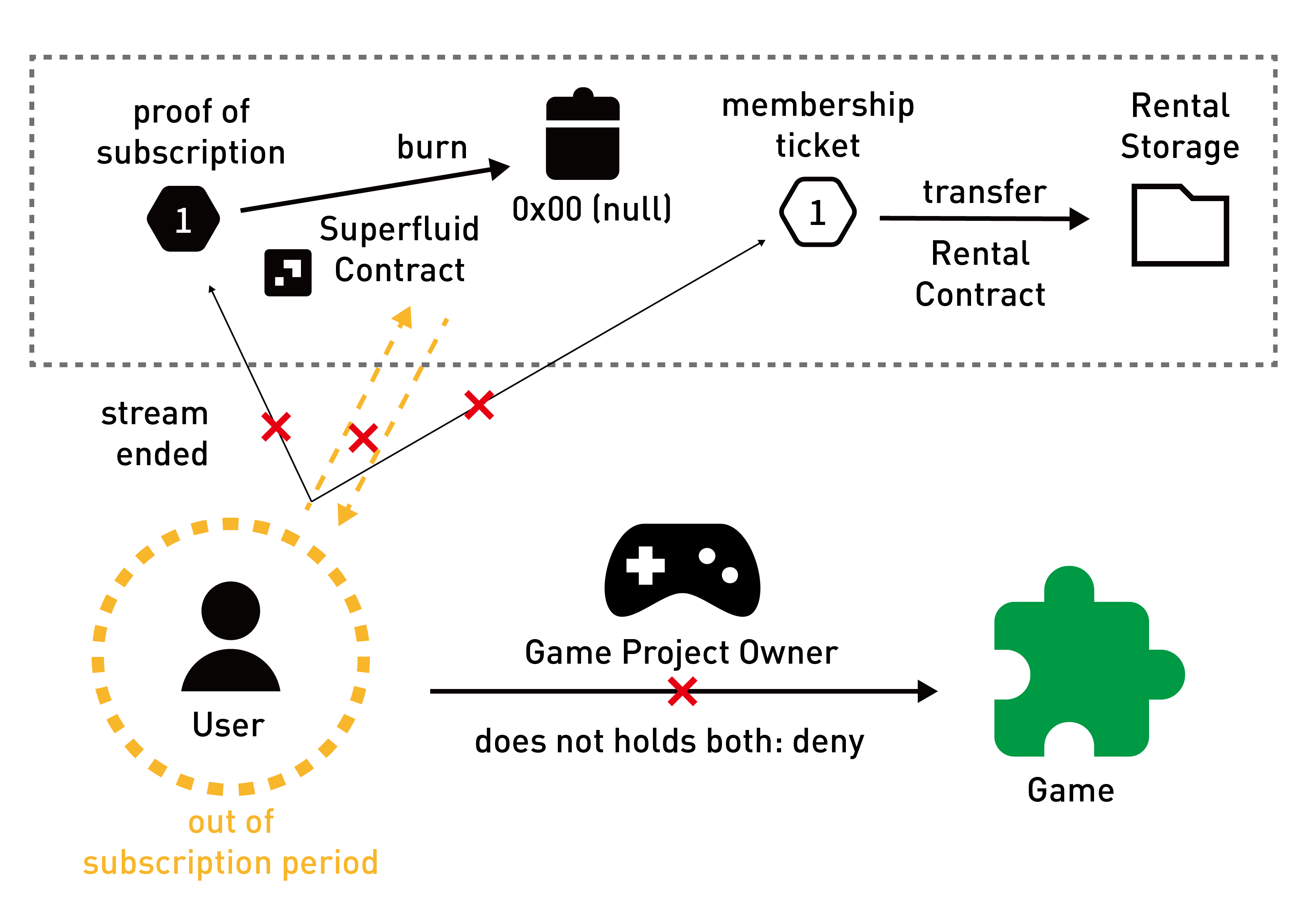
I implemented a dual-NFT verification system using Superfluid(opens in new window)’s streaming payment protocol. The first NFT (Proof of Subscription) is minted automatically when the payment stream starts and burned when payment stops, serving as the payment receipt. The second NFT (Proof of Membership Ticket) uses a rental mechanism we designed: instead of expensive minting and burning, the NFT transfers from a storage contract to the user and automatically returns when the subscription ends.
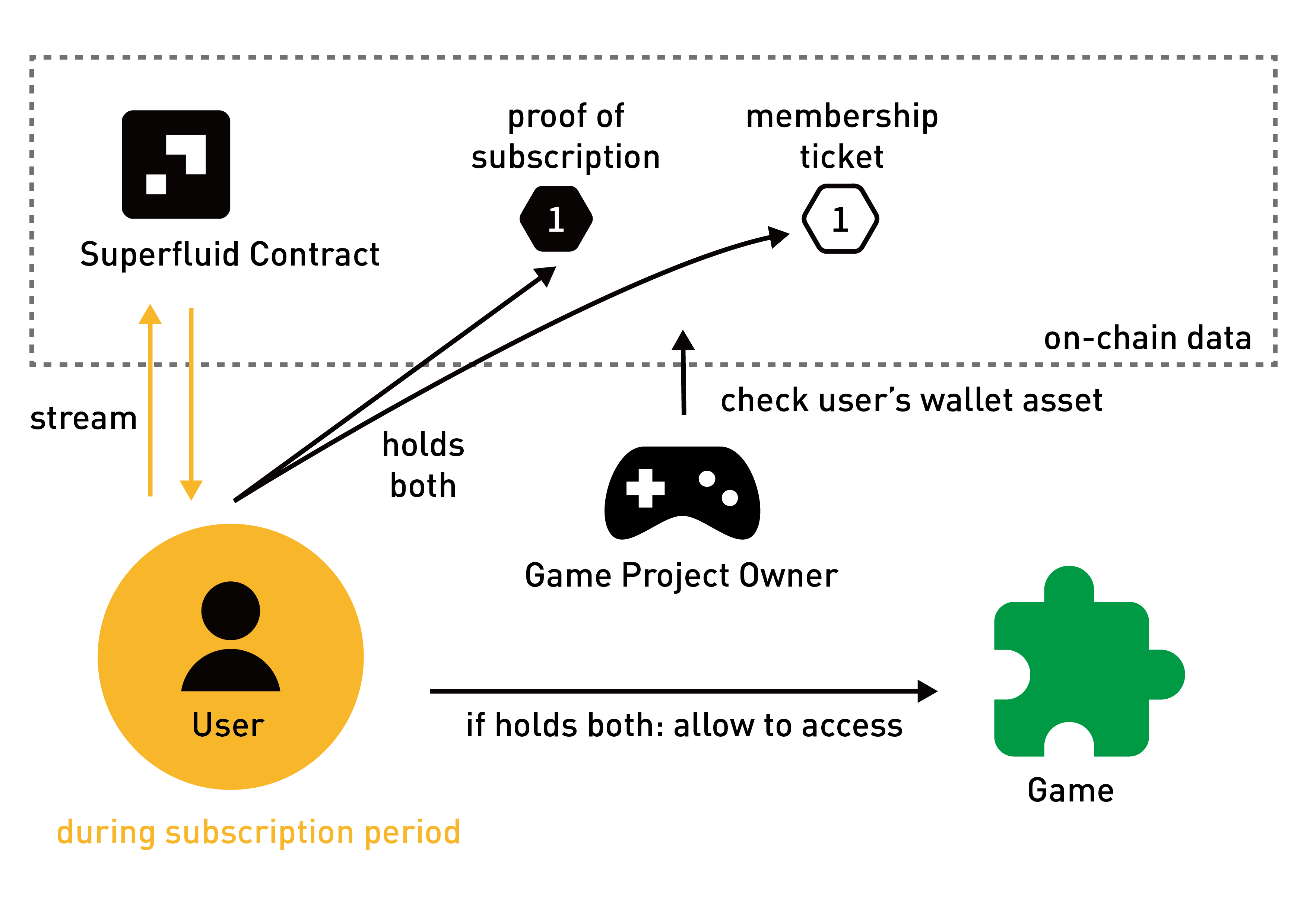
Games verify access with one simple check: does this wallet hold both NFTs? If yes, grant premium access. If no, free tier only. No timestamp checking, no payment validation, no API calls to our servers. Pure on-chain verification.
This was one of the first implementations combining Superfluid streams with rental NFT mechanics for gaming subscriptions. The dual-NFT pattern became a reference mechanism for other projects in the Superfluid ecosystem.
(opens in new window)Gas Optimization
NFT operations are expensive. Minting, burning, and transferring all cost gas. For a subscription lasting just a few hours, gas costs could exceed the subscription fee itself.
The rental mechanism was my biggest optimization. Instead of minting a fresh Membership Ticket every subscription and burning it when done, we designed a rental pool where NFTs are transferred rather than created. This saved approximately 70% gas per subscription cycle.
We also built an event-driven indexer in Python that caches subscription states off-chain, so games query our API instead of making expensive blockchain reads. For administrative tasks, batching logic bundles multiple transactions, further reducing per-user costs.
The result: gas costs per subscription cycle dropped to about $0.01 on Polygon, API verification response times stayed under 50ms, and the system handles 10,000+ concurrent subscriptions.
(opens in new window)Developer Experience
Making blockchain accessible meant hiding blockchain complexity entirely. If game developers need to understand Superfluid streams, gas fees, or wallet integration, we’ve failed.
We built an SDK that wraps all the complexity into three core functions. Game developers integrate our system with about 20 lines of code, no wallet management, no gas fees, no Solidity knowledge required. Behind the SDK, I also built a Python backend service for webhook notifications, a subgraph indexer for querying historical data, and a dashboard where game studios configure pricing and view analytics.
(opens in new window)Impact & Results
For players, the system delivers pay-as-you-go freedom. Play three hours, pay for three hours. No wasted money on unused days, no commitment anxiety. Players can drop in and out of premium features without feeling locked into a monthly plan.
For game developers, the lower barrier to entry drives conversions. Players are more willing to try premium features when they are not committing to a full month. Our pilot games saw 35% higher conversion from free to premium tiers.
The system also unlocks new monetization models previously impossible with monthly billing. Dynamic pricing, time-of-day rates, and usage-based tiers all become feasible. Game studios integrate subscriptions without hiring blockchain developers or managing smart contracts.
For the industry, this was one of the first production implementations of subscription NFTs in gaming. We proved that blockchain subscriptions work at scale, that per-second streaming payments are practical for real-time applications, and that Web3 can enhance gaming without forcing crypto stuff on players. Our architecture became a reference design cited in Superfluid’s documentation.
(opens in new window)Lessons Learned
Blockchain’s value is not in replacing everything. It is in fixing the broken parts of existing systems. Monthly subscriptions work well for consistent-use services like streaming video, but they are a poor fit for sporadic-use services like gaming. Blockchain’s programmable money makes it possible to rethink billing infrastructure in ways that traditional systems can’t.
Players do not care about gas fees, wallet addresses, or smart contracts. They care about fair pricing, flexibility, and not overpaying. If our blockchain project requires users to understand crypto, we’ve already lost mainstream adoption.
The best Web3 user experience is when users feel like they’re using Web2.